ESA Applications and Field Experience | TRIPOD Corporation
 Keiichiro Nagaiwa
This article introduces our ESA diagnostic experience in Japan by industry, equipment type and detected anomaly. Details of individual cases are omitted to protect customer and equipment information.
1. What is Electrical Signature Analysis (ESA)?
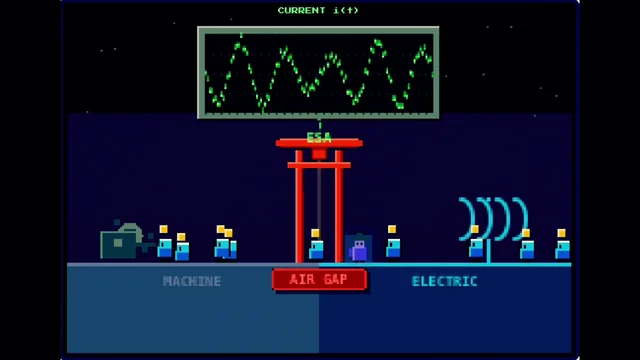
Electrical Signature Analysis (ESA) assesses motors and generators by measuring current and voltage at the electrical panel. When measurement conditions and safety procedures allow, data can be acquired while the equipment is operating without mounting sensors on rotating parts.
Current and voltage reflect load variations, rotor and winding anomalies, and supply conditions. ESA compares these signatures to obtain several kinds of diagnostic information from one set of electrical measurements.
2. Summary of Application Experience
Expansion of Domestic Track Record
To date, TRIPOD has conducted ESA diagnostics on approximately 30 units across Japan. Our experience spans petroleum refining, petrochemicals, waste incineration, metal refining, wastewater treatment, and wind power generation, covering more than ten types of machinery.
We support a broad range of equipment capacities, from small-scale machinery under 1 kW to large-scale units of approximately 2 MW. Our experience covers diverse drive systems, including inverter-driven systems, direct-on-line (DOL) power supplies, induction generators, and synchronous generators. Among these, wind turbine generators represent our largest application area, accounting for nearly half of our total diagnostic track record.
Support for DC Motors
We have also applied ESA to DC motors using thyristor (SCR) phase control. Unlike AC machines, DC motors have distinct components, including commutators, brushes, and armatures; control components are also within the diagnostic scope. ESA can also be useful when electrical control anomalies and mechanical deterioration occur together.
International Experience & Future Vision
Our manufacturing partners provide ESA diagnostics worldwide. The number of overseas applications is not disclosed, but there is long-standing diagnostic experience across power plants, industrial facilities and wind power.
In Japan, we continue to build experience with our partners through diagnostics suited to each asset and application.
3. Scope of Faults and Conditions Detected by ESA
Three Key Areas of Detection
Fluid & Environmental Factors
Fluid Vibration (Pulsation & Turbulence) CavitationMechanical Anomalies in Drivetrains
Blade & Impeller Defects Bearing Defects Gear & Gearbox Defects (Wear / Chipping) Rotor Unbalance Misalignment Belt Faults (Tension & Slip)Anomalies in Rotor, Stator, Power Supply, & Control Systems
AC machine examples (depending on machine type)
Rotor bar damage (e.g. squirrel-cage induction machines) Rotor Eccentricity (Static & Dynamic) Signs of stator winding anomalies (e.g. inter-turn shorts) Power Quality (Imbalance & Harmonics)DC Machinery (Specific)
Commutator & Brush Anomalies Armature Winding Anomalies Gate Driver & Firing Control Faults Comparator Circuit Degradation SCR / Thyristor FaultsOur Distinct Advantage in Electrical Anomaly Detection
Rotor bar damage and winding-anomaly signatures can be difficult to assess using vibration alone. Confirming insulation condition may also require dedicated tests, such as insulation-resistance or partial-discharge testing, suited to the equipment. ESA directly observes current and voltage to investigate electrical anomalies. Our experience includes bearings, gears, blades, eccentricity and rotor bars, as well as cases involving both control-system faults and mechanical deterioration in DC motors.
Complementary Roles: ESA vs. Vibration Analysis
4. Extensive Applicability
Our diagnostic capabilities extend to a wide variety of rotating machinery, including pumps, blowers/fans, compressors, agitators/mixers, vacuum pumps, centrifuges, and generators.
This approach is particularly useful when installing vibration sensors is difficult, such as on inverter-driven equipment or submersible pumps. If the electrical panel can be accessed safely, operating equipment may be assessed without approaching the machine itself. Applicability in potentially explosive, high-temperature, or humid environments is determined case by case after checking the measurement location, equipment, and site safety requirements.
5. Application to Wind Turbines
We focus particularly on wind-power applications and work with both induction and synchronous generators. We have detected turbulence-induced blade aerodynamic imbalance, main bearing anomalies, Gearbox gear and bearing anomalies, and generator bearing anomalies.
Wind turbine generators are installed in confined spaces atop towers. Each inspection can therefore involve downtime and access costs. ESA can assess equipment from electrical connections at ground level, which makes it suited to these constraints.
6. Summary — Objective Asset Health Assessment Driven by Physics
ESA also supports assessment when no abnormal signatures are found within the measurement conditions and scope examined. This finding can inform maintenance decisions, but does not establish the absence of every fault or guarantee future reliability. We assess equipment on physical evidence and recommend action when warranted.
Related Information and Inquiries
Diagnostic applicability depends on equipment configuration, operating conditions and the signals available for measurement. Contact us to discuss the scope and approach.
*All content presented has been anonymized; no information that could identify specific clients or equipment is included.